
Trench Lab · O-Line · Pass Protection · Coach Jay Freeman
How to pass block: the set, the anchor, and reading the rush
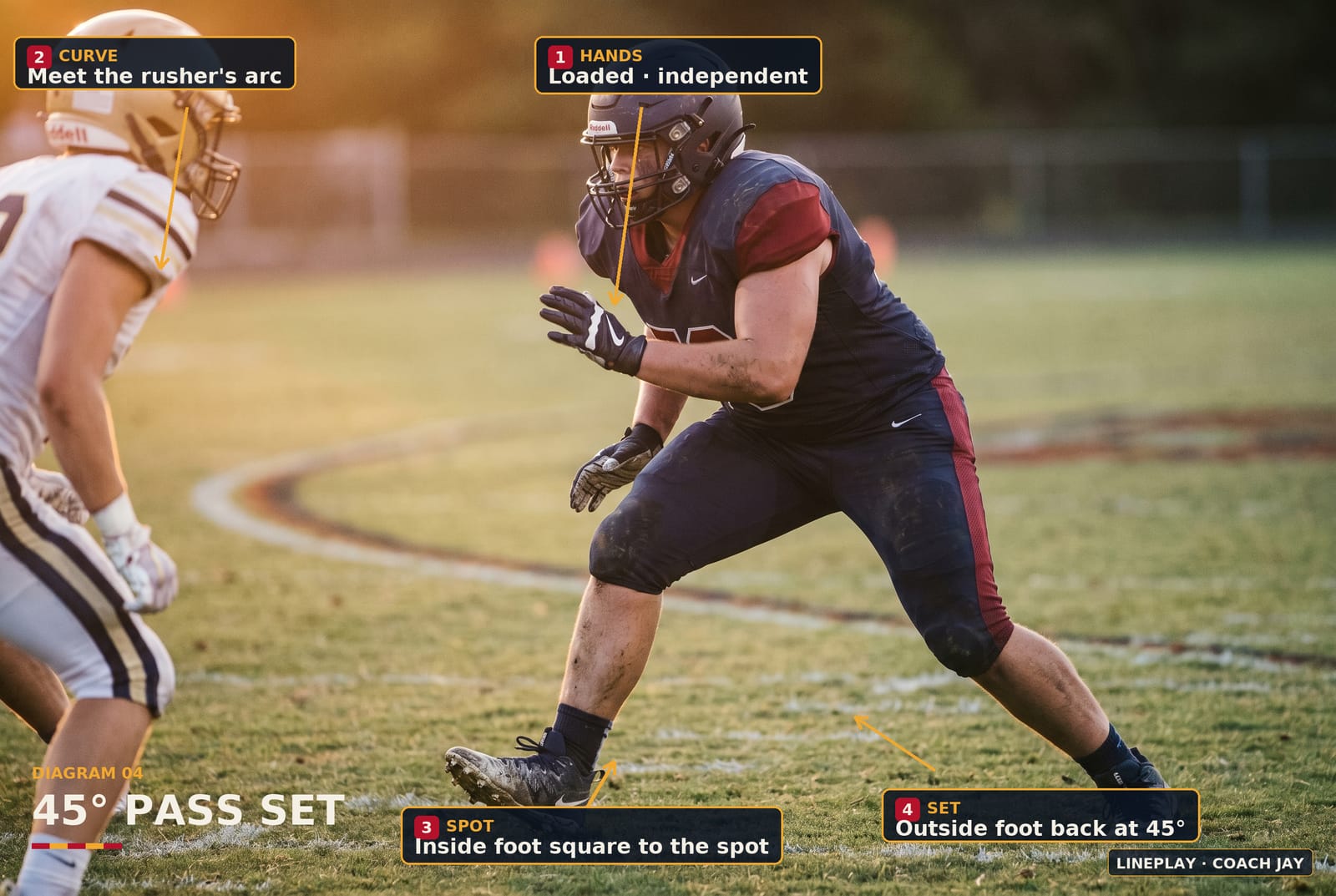
To pass block, fire off the snap into a 45° set that keeps your inside foot square to the rusher, strike with independent hands (inside hand for leverage, outside hand to frame), and anchor by sinking your hips and widening your base against power. Then mirror the rusher — he can only do one of four things.
By Coach Jay Freeman · 32 years coaching the line · Updated May 31, 2026
Start with the set, not the punch
Pass protection is won with your feet before your hands ever touch the rusher. Coach Jay Freeman teaches a 45° set — not a vertical pass set — because it lets you meet the edge rusher at the spot while keeping your inside foot square. A vertical set surrenders ground and opens an inside counter; a flat 45° set keeps you between the rusher and the quarterback.
Out of your stance, your first move is short and hard. Gain depth and width at the same time on a 45° angle. Keep your weight inside your frame, eyes on the rusher's near number, and your hands loaded and ready — not reaching.
Independent hands — two separate weapons
Most linemen punch with both hands together. Coach Jay coaches independent hands: each hand is its own weapon, landing separately. The inside hand strikes first for leverage — it controls the rusher's chest and your leverage on the rep. The outside hand follows to frame the rusher and steer him past the quarterback.
They never fire together, because two hands punching at once means if you miss, you miss with everything and you're off balance. Independent hands mean one hand can reset while the other holds.
Anchor against the bull rush
When the rusher tries to run through you (a bull rush or speed-to-power), you anchor: sink your hips, drop your weight, widen your base, and roll your hips under the bull. Do not lean — leaning is how you get walked back into the quarterback. You absorb power from the ground up, not from your chest.
Mirror the rush — he can only do one of four things
Coach Jay's install simplifies the whole rep: the rusher does one of four things. He bull rushes (power), he speed rushes (edge), he converts speed-to-power, or he counters back inside. Your job is to read which one and cover it with your feet, keeping your hands ready to strike. You don't guess — you react with your eyes and feet, then place your hands.
Step by step
- Fire into a 45° set. Off the snap, take a short, hard step on a 45° angle gaining depth and width together. Keep your inside foot square to the rusher.
- Load your hands, read the rusher. Eyes on the near number, hands cocked and ready. Read whether he is coming with power, speed, speed-to-power, or a counter.
- Strike with independent hands. Inside hand lands first for leverage on the chest; outside hand follows to frame and steer. Never punch both at once.
- Anchor or mirror. Against power, sink your hips, widen your base, and roll under the bull. Against speed, keep mirroring with your feet and ride him past the QB.
- Reset and finish. Keep your feet moving on contact, reset the hand that loses placement, and stay square until the whistle.
"The rusher does one of four things — power, speed, speed-to-power, or counter. Cover it with your feet, then place your hands. You don't guess in pass pro. You react." — Coach Jay Freeman
Common questions
- What is the best pass set for an offensive lineman?
- Coach Jay Freeman teaches a 45° set over a vertical set. The 45° angle lets you meet the edge rusher at the apex while keeping your inside foot square, which protects against the inside counter that a vertical set exposes.
- How do you stop getting bull rushed?
- Anchor: sink your hips, drop your weight, widen your base, and roll your hips under the rusher. Power is absorbed from the ground up — never lean into a bull rush, because that is exactly how you get walked back into the quarterback.
- Should you punch with one hand or two in pass protection?
- Independent hands — one at a time. The inside hand strikes first for leverage, the outside hand follows to frame. Punching both together leaves you off balance if you miss; independent hands let one hand reset while the other holds.