
Trench Lab · Youth & Parents · Coach Jay Freeman
How to train a youth lineman the right way
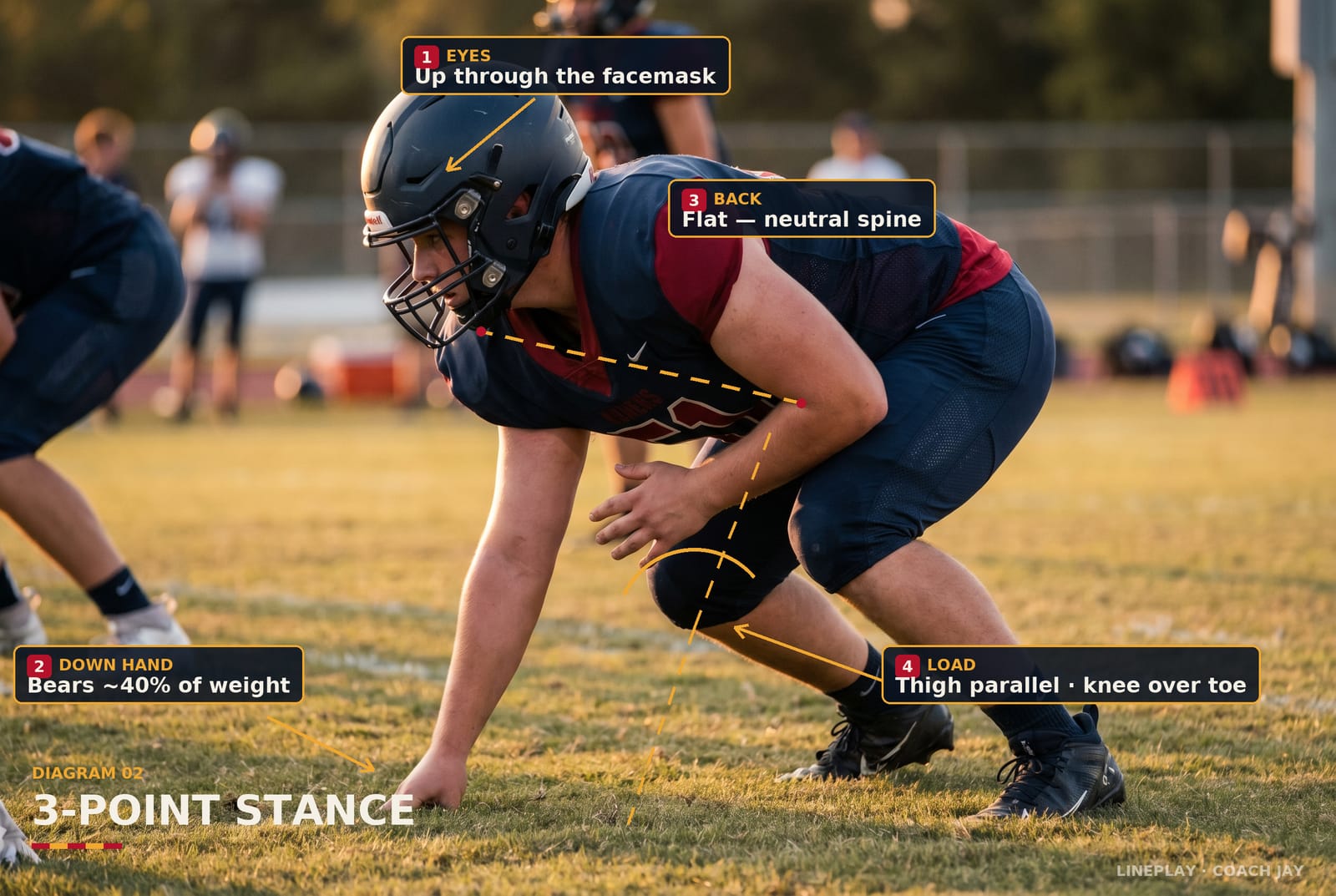
Train a youth lineman by mastering fundamentals before strength: a good stance (flat back, eyes up, weight on the balls of the feet), quick feet, low pad level and leverage, and safe hand placement inside the frame. At 8–13, technique and footwork beat size and weights every time — and they build the habits that carry into high school.
By Coach Jay Freeman · 32 years coaching the line · Updated May 31, 2026
Fundamentals before strength
A young lineman doesn't need a weight program — he needs clean fundamentals. The order that matters: stance, get-off, footwork, leverage (pad level), and hand placement. A 10-year-old who can fire out of a flat-backed stance with quick feet and inside hands will dominate kids who are just bigger. Size advantages disappear by high school; great technique compounds.
Stance and feet first
Start every session with the stance — flat back, eyes up, knees bent, weight on the balls of the feet, never the heels. Then quick-feet work: short, hard first steps (not long lunges), and keeping the feet moving on contact. Footwork is the foundation; a young lineman who stops his feet on contact gets run over no matter how strong he is.
Leverage — low man wins
Teach the single most important truth in the trenches early: low man wins. The lineman with the lower pad level controls the rep. Bend the knees, sink the hips, keep the back flat, and strike up through the defender. A smaller kid who plays with leverage beats a bigger kid who plays tall — and that lesson sticks for life.
Safe hands and safe contact
Hands strike inside the frame — on the chest, thumbs up — never to the head or outside the shoulders. Heads-up contact only: eyes up, face up, never leading with the crown of the helmet. Good technique is also the safest technique; the flat back and eyes-up posture that wins reps is the same posture that protects the neck.
Step by step
- Drill the stance. Flat back, eyes up, knees bent, weight on the balls of the feet. Have him get in and out of it until it's automatic.
- Quick-feet starts. Short, hard six-inch first steps on a target. No long lunges. Add a second quick step to build a fast, balanced get-off.
- Leverage / fit drill. On knees or in a chute, practice a low-pad fit: hands inside the chest, flat back, hips under. Reinforce "low man wins."
- Run the feet on contact. On a bag or shield, strike and keep the feet chopping through contact for 3–5 seconds. Stopping the feet is the cardinal sin.
"Get the stance, the feet, and the leverage right young and you've got a lineman for life. The size stuff sorts itself out — the technique is what separates them." — Coach Jay Freeman
Common questions
- What is the most important thing to teach a young lineman?
- Leverage — low man wins. The lineman with the lower pad level controls the rep. Combined with a good stance, quick feet, and inside hands, leverage lets a smaller, well-coached kid beat a bigger one, and it builds habits that carry into high school.
- Should youth linemen lift weights?
- At 8–13, technique and footwork matter far more than weights. Master the stance, get-off, leverage, and hand placement first — bodyweight work and clean fundamentals build the foundation that strength training adds to later, safely.
- How do I help my son get better at offensive line at home?
- Drill the stance until it's automatic, do short-hard first-step starts, practice a low-pad fit with hands inside the frame, and reinforce running the feet through contact on a bag or shield. Coach Jay Freeman's free position-specific plan gives you a full at-home program.